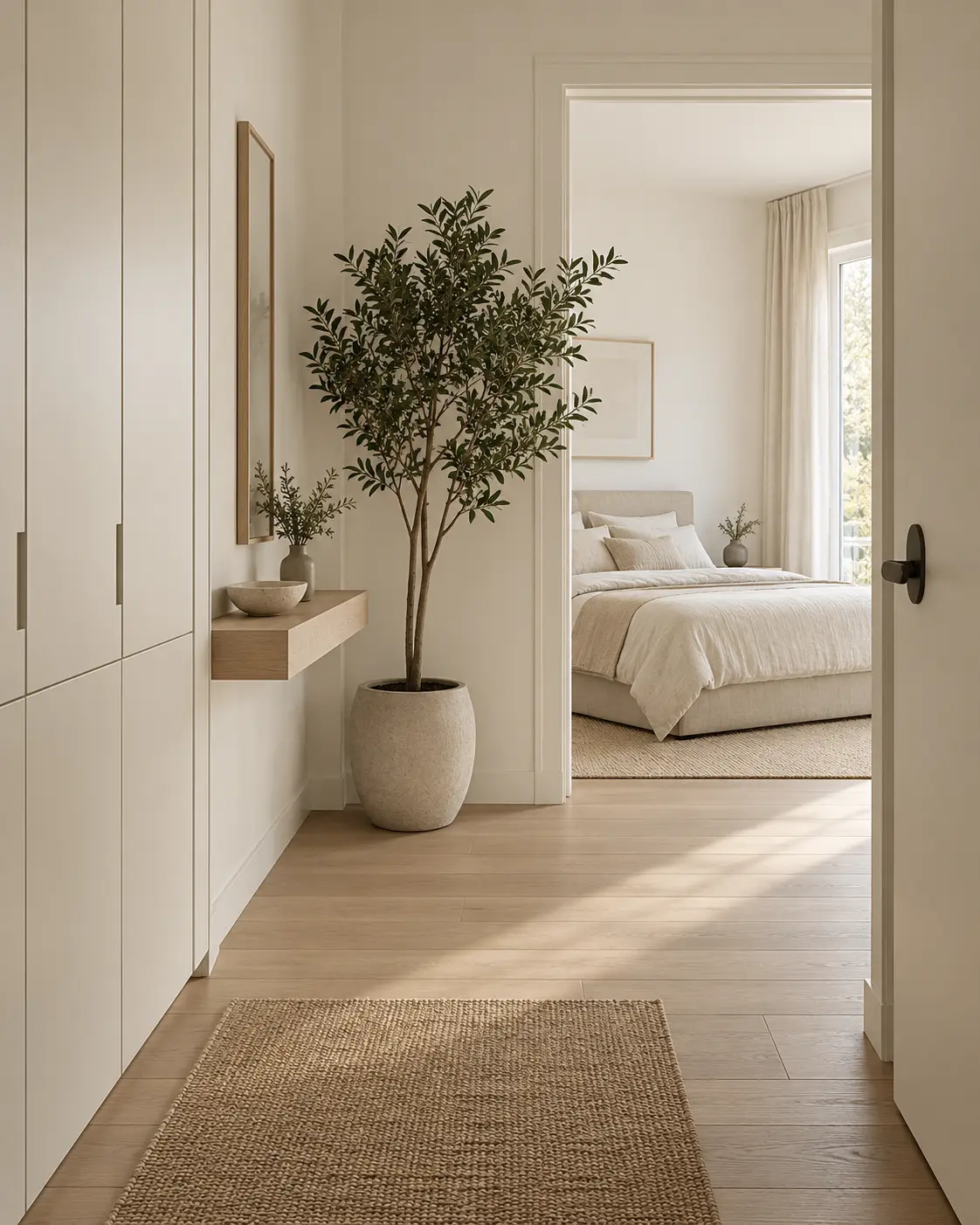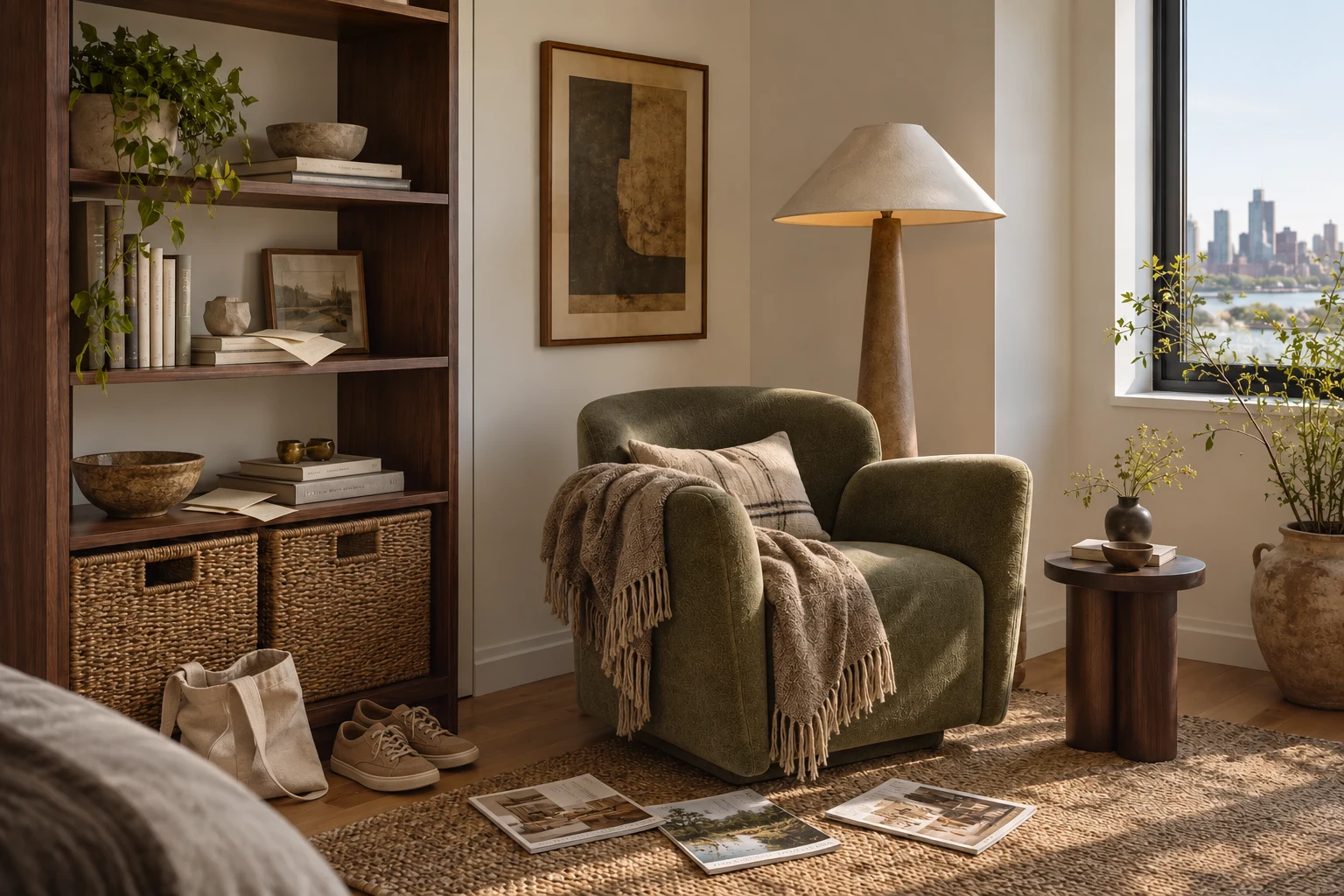
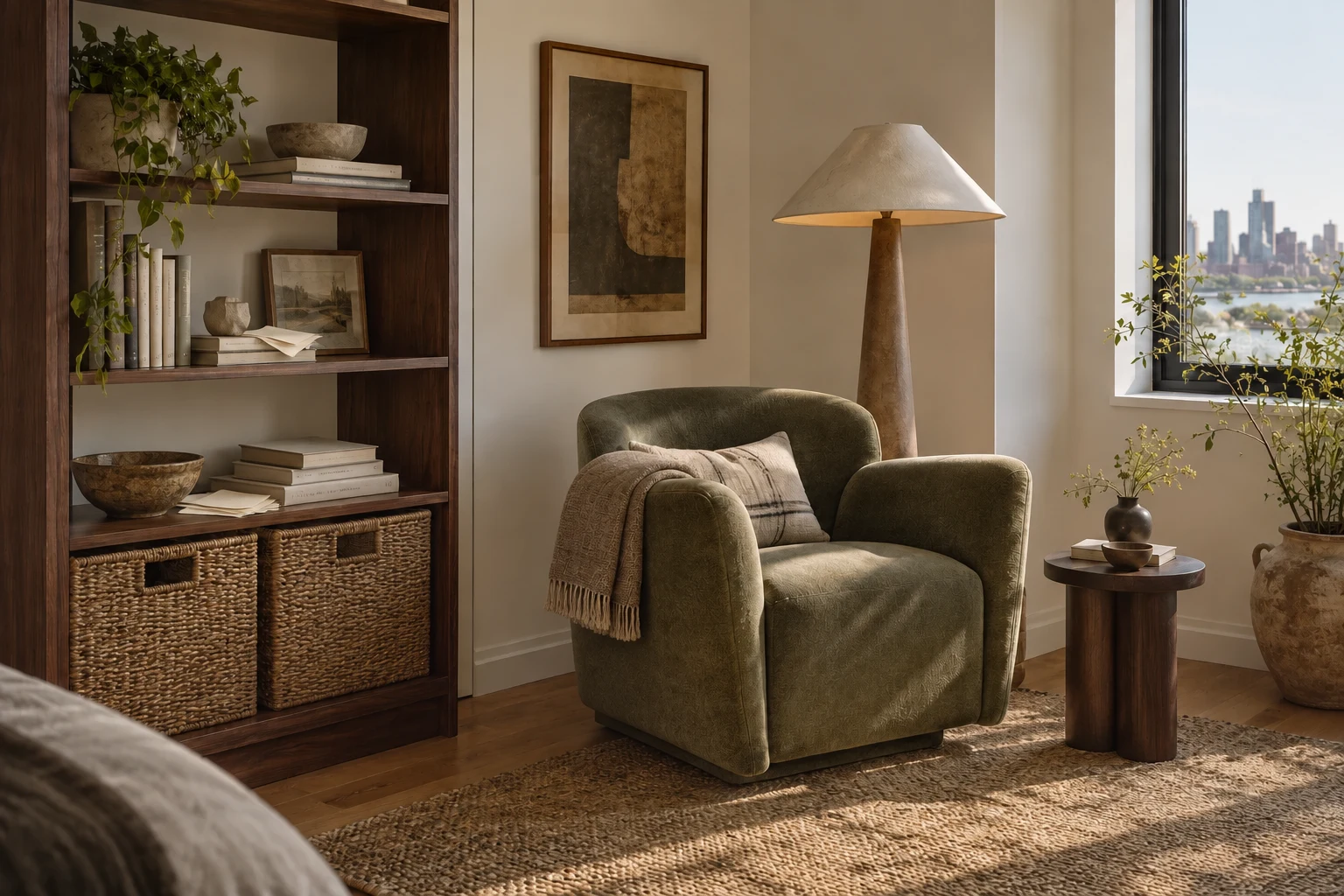
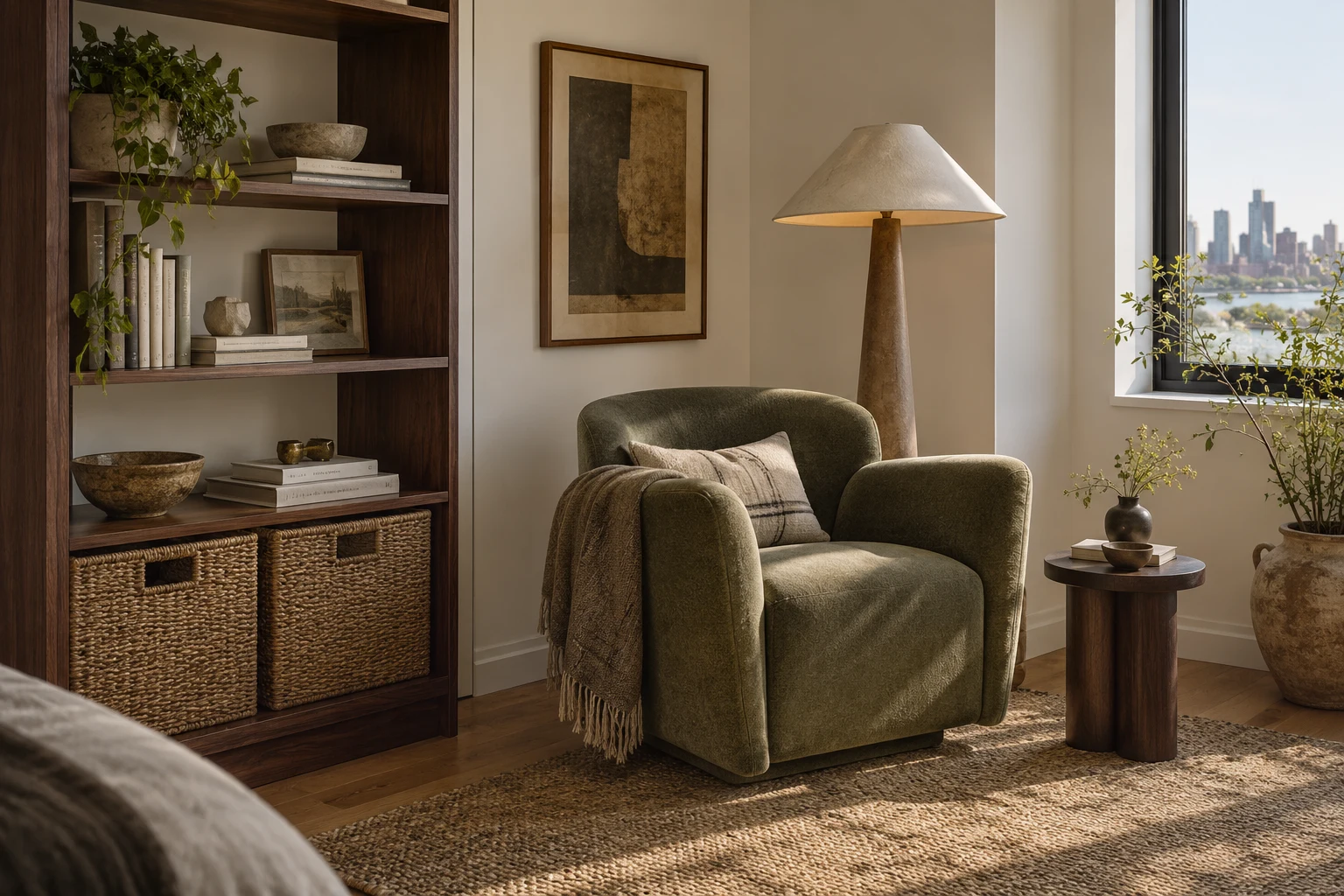
A small room rarely needs six new storage products. It needs a clearer job, a comfortable route through it, and a sensible place for the things you use every day. Start with the friction: what do you move out of the way just to sit down?
1. Give the room one main job
A living room can also be a workspace, but every activity needs a boundary. Keep work supplies together so the desk can close down at night. A tray or one dedicated drawer often does more than another freestanding cabinet.
2. Walk the route before buying
Use painter’s tape to mark the footprint of a possible sofa, desk, or cabinet. Open doors and drawers. Carry a laundry basket through the room. If daily movement is awkward, a beautiful piece is still the wrong size.
3. Move occasional items upward
Use higher shelves for lighter things you rarely need. Put everyday items within easy reach. Follow the furniture maker’s anchoring instructions, and check the wall type before fitting shelves. Storage should make your room easier to use.
4. Mix open and closed storage
Open shelves suit books and a few objects you enjoy seeing. Doors or baskets help with cables, paperwork, and mixed supplies. Our starting point: leave at least one shelf visually quiet, then adjust for how much you actually need to store.
5. Choose useful flexibility
A nesting table earns its place when you need an extra surface for guests. A storage ottoman works when you can open it without first moving half the room. Don’t pay for a second function you will never use.
6. Keep the reset easy
Give each category a home near where it is used. A room you can reset in a few minutes will feel more generous than one that needs constant rearranging.
Remove one item that interrupts your route through the room. Live with the new layout for a few days before shopping for a replacement.