The most interesting artwork in a home is often the piece its owner can tell a story about. Start with what holds your attention: a photograph, a geometric print, an expressive painting, or an unexpected color combination. Matching the sofa is optional.
Start with the wall, not a shopping cart
Photograph the wall straight on. Measure the usable area and the furniture below it. Tape up paper in the size of the frame you are considering. Step back to the doorway, then sit where you normally sit. Does the piece feel connected to the room from both places?
One strong piece can be enough
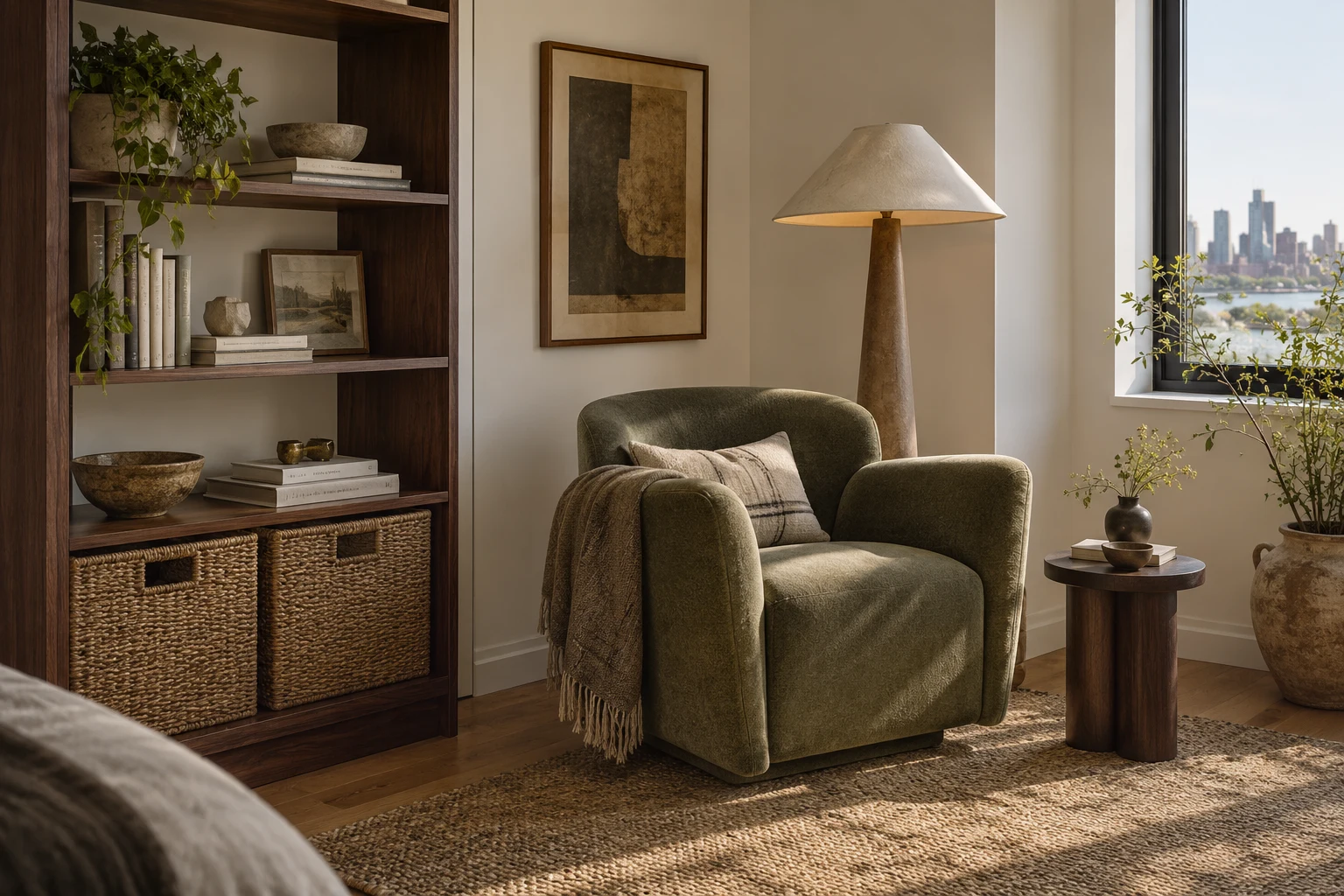
If a room already has busy shelves, patterned textiles, and several finishes, one larger artwork may give the eye a calmer destination. A smaller work can still feel intentional when it has a generous mat or a more intimate spot, such as beside a reading chair.
Borrow a color, don’t copy the painting
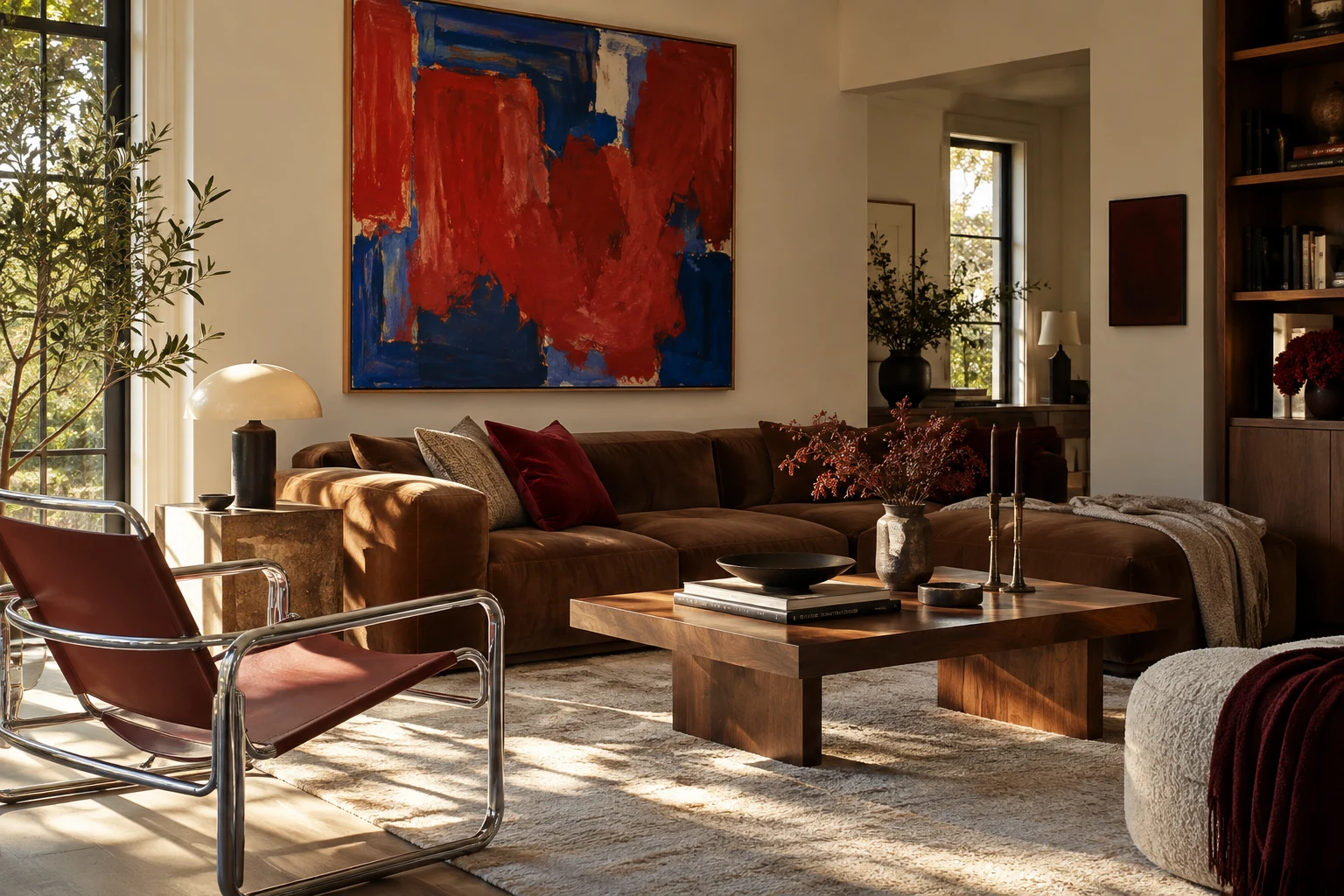
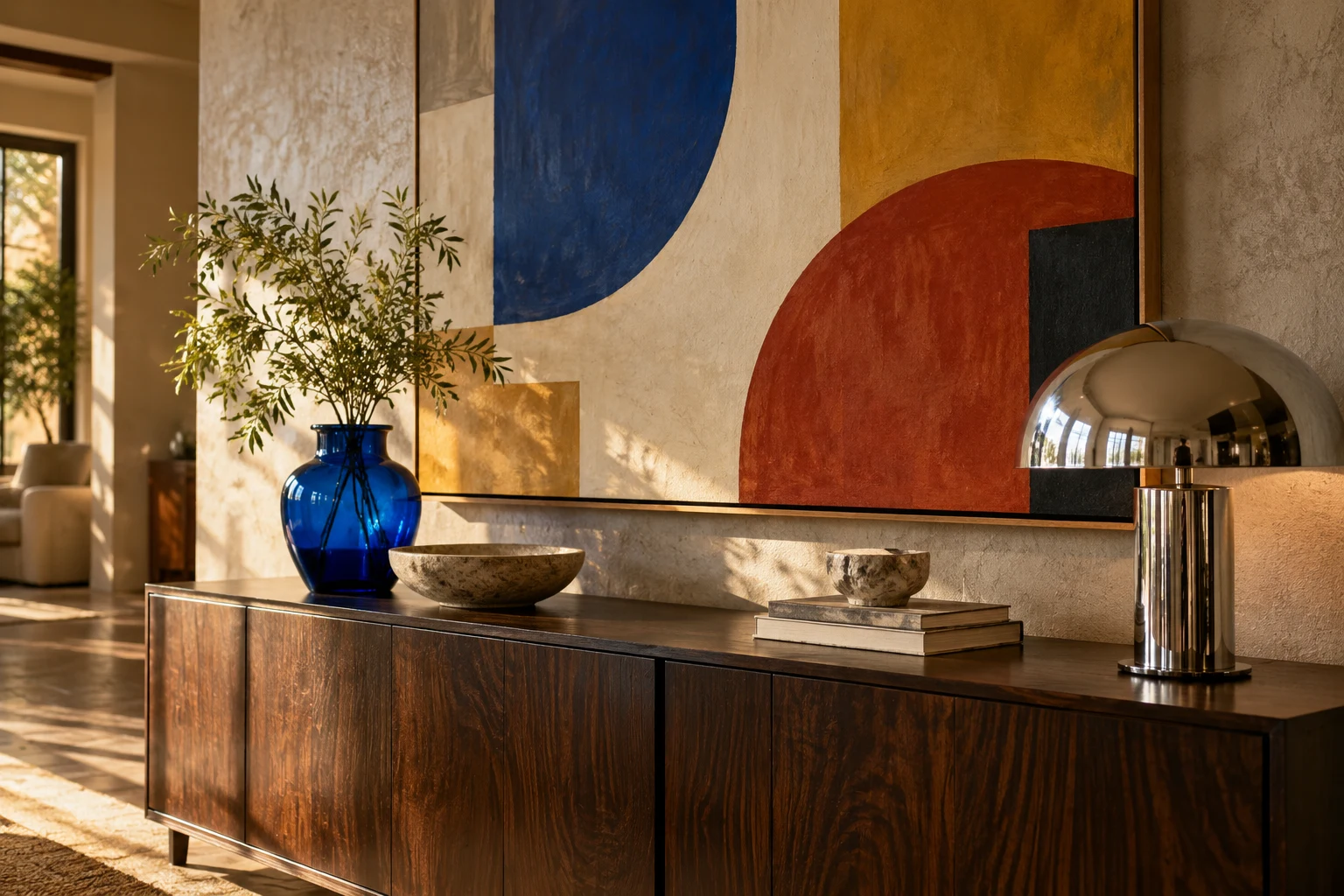
Pick one quiet color from the artwork and echo it once elsewhere. A blue vase or a reddish-brown cushion can create a relationship without turning the entire room into a matching set. Leave the other colors alone.
Make the frame part of the decision
A simple frame can let a busy print breathe. A warm wood frame can soften a graphic black-and-white image. Compare the total framed size, glazing, hanging hardware, and delivery cost before deciding whether an inexpensive print is actually inexpensive.
Find art without overspending
Try local artists’ small works, print editions, your own photography, or public-domain museum images. The Met’s Open Access program offers eligible images for unrestricted use. Check the individual artwork’s Open Access designation and download the best available file. Printing and framing still have a cost.
If you love the work, you do not need to justify it with a trend. Test its scale and placement before deciding it does not belong.