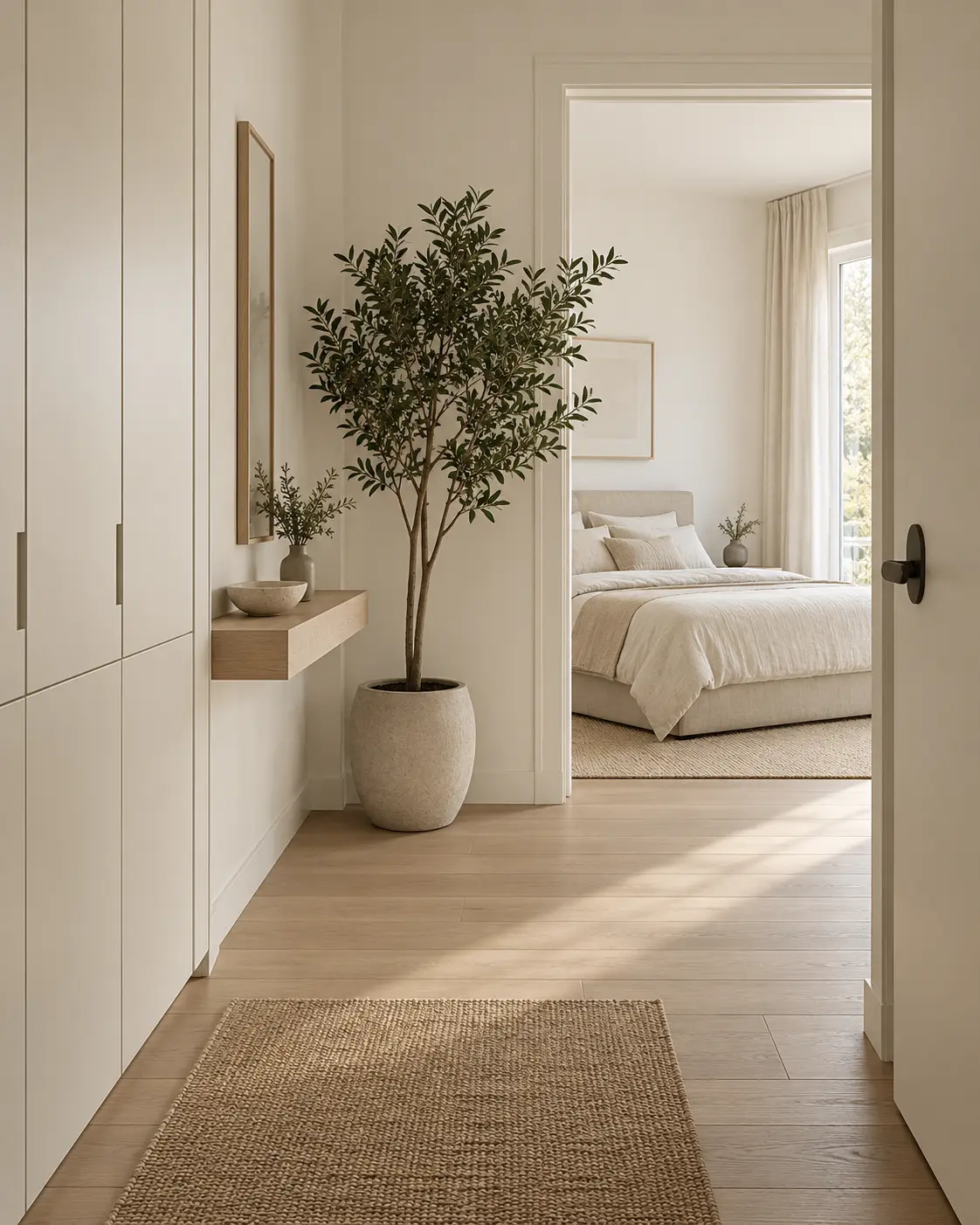
The first clear surface inside the door tends to become the entryway, whether you planned it that way or not. A little structure can keep everyday things from migrating to the sofa or kitchen counter.
Count what actually comes through the door
Start with your daily bag, coat, keys, and the shoes you regularly wear. Give those things a reachable spot. Seasonal gear and occasional bags can live elsewhere, so this area does not have to store your entire life.
Work with the wall you have
A narrow wall may suit hooks and a small tray better than a deep console. If drilling is not an option, use furniture you already own. Check the attachment and load requirements for any hanging organizer, particularly where children might pull on it.
A flexible option: IKEA SKÅDIS
The SKÅDIS series combines pegboards with rearrangeable hooks, containers, and shelves. Our reason to consider it: small everyday items can have a visible home in a compact area. Check the board size, compatible accessories, and mounting requirements; accessories can add to the total cost.
A pegboard is less useful if you dislike seeing all your belongings. In that case, one shallow drawer or a lidded basket may better suit the room.
Give shoes a limit
Keep only the pairs currently in rotation beside the door. Use a tray or existing shelf to define the space. When it fills up, move an older pair back to its main storage spot before adding another.
Make a leaving-home check easy
Place the items you tend to forget together. Keep the walkway and door swing clear. Spend a minute resetting the area each evening, so the next morning begins with fewer small searches.
Try one tray and one bag spot for a week. Buy a larger organizing system only after you know what is missing.