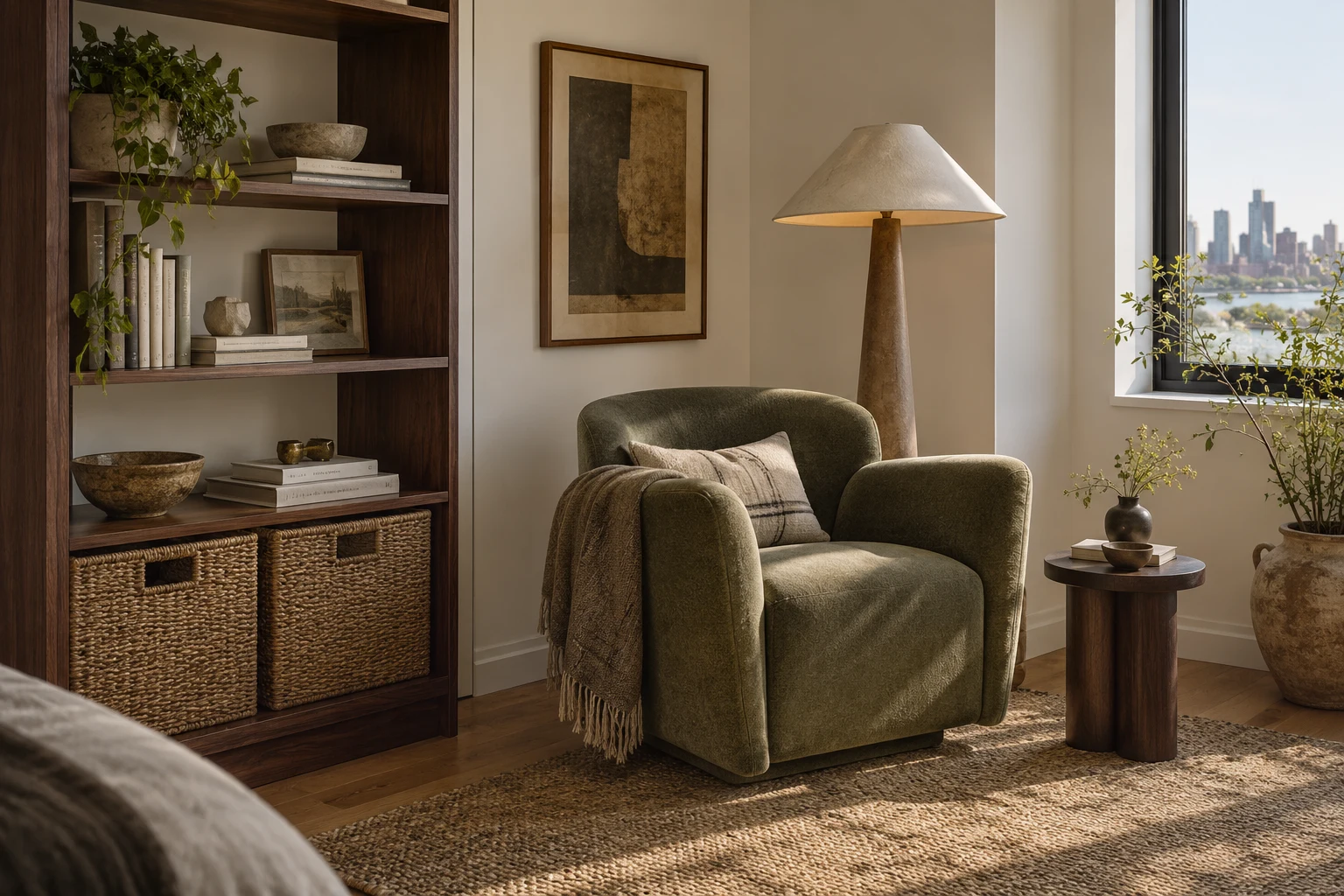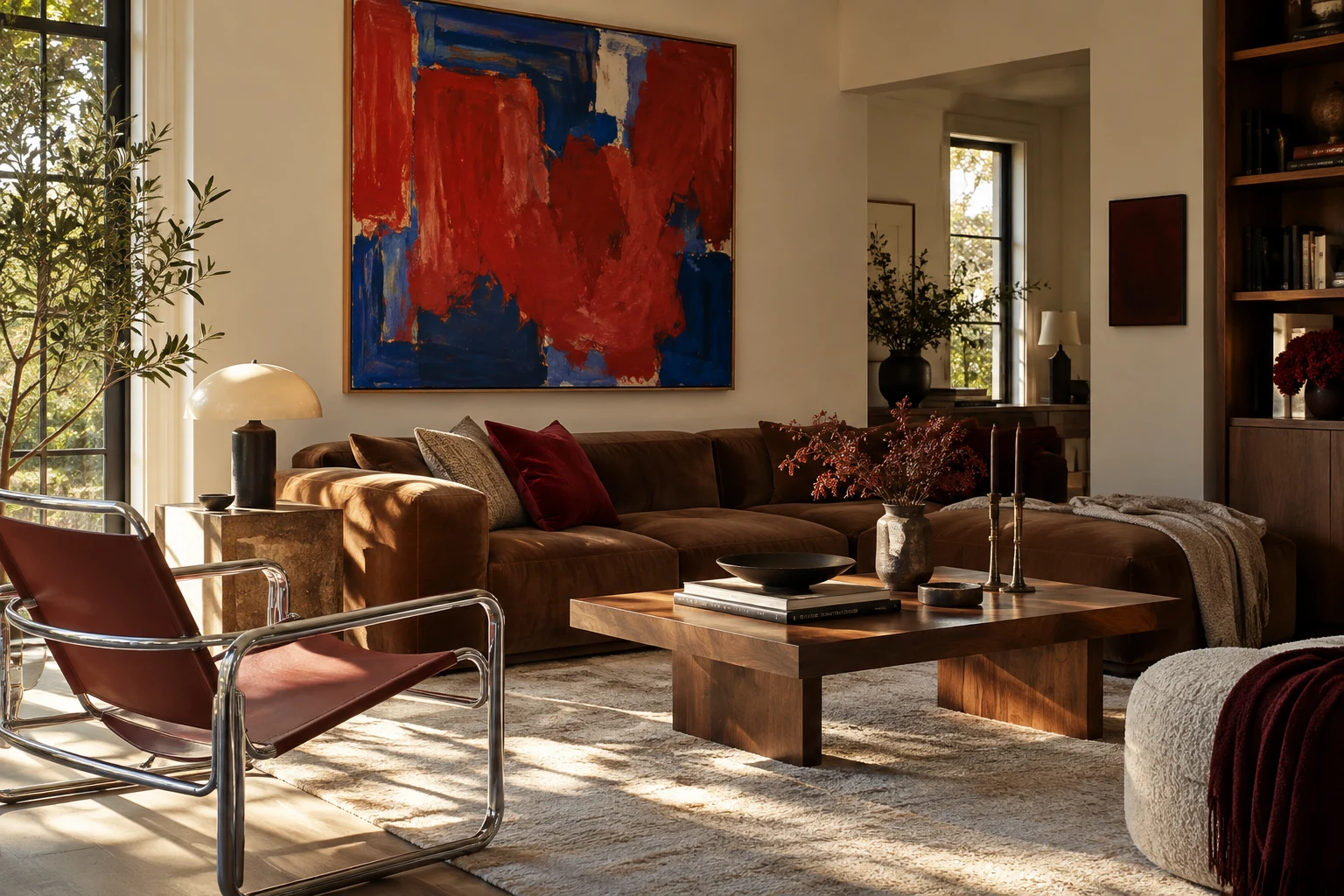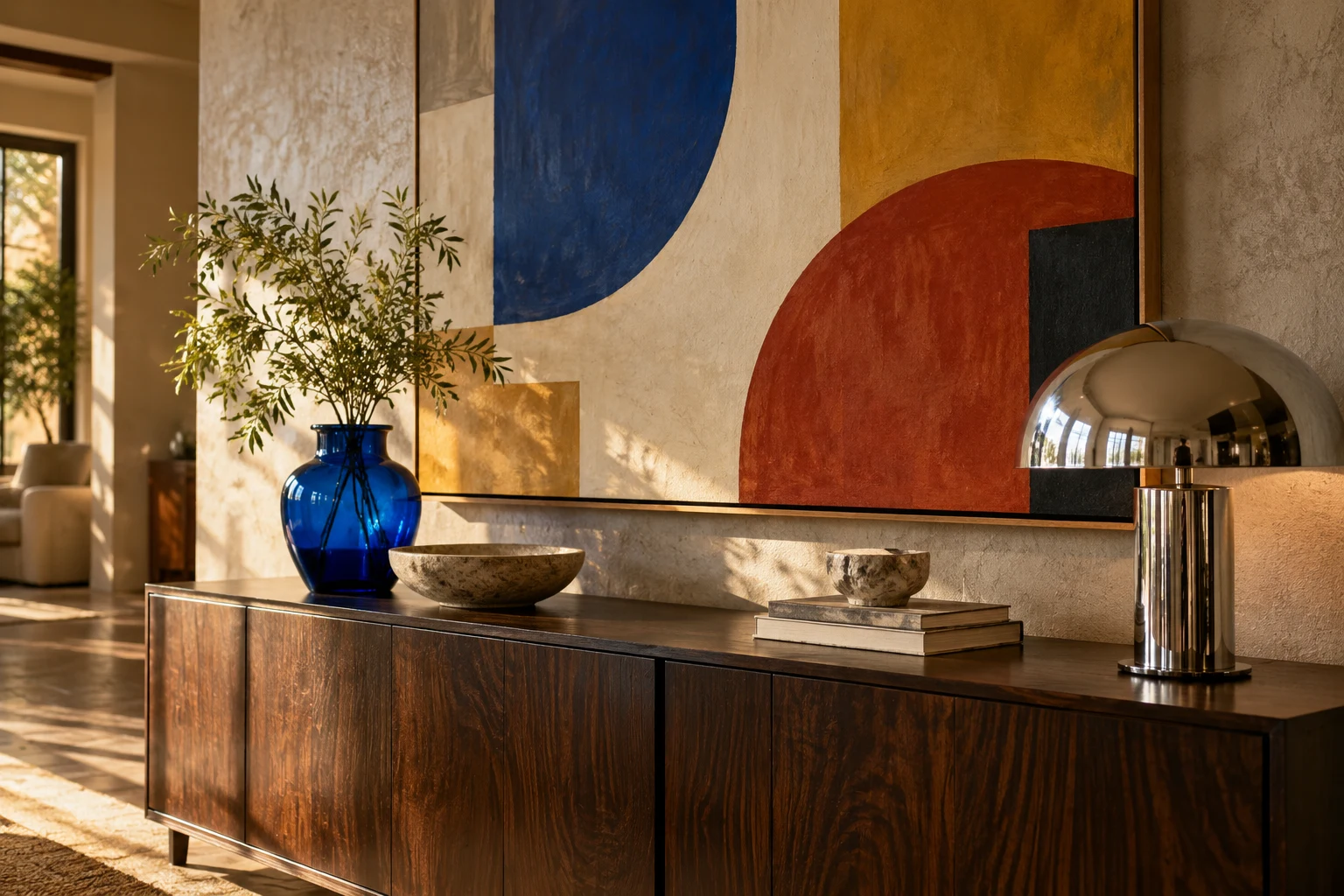
A good gallery wall has a relationship between its pieces, but they do not all have to match. The connection could be a color, a shared subject, or simply a group of things you enjoy looking at together.
Lay it out before making holes
Arrange the framed pieces on the floor. Start with the largest, then work outward. Photograph the arrangement and leave it for a day. If it feels too busy, take one piece out instead of trying to find a better spot for everything.
Use paper to test the scale
Trace the outside of each frame onto paper and tape the templates to the wall with a wall-safe method. Mark the hanging point on each template. Check the entire group from the doorway and from your usual seat before mounting anything.
Choose one kind of consistency
Similar gaps between frames can unify different artwork. So can repeating one frame finish. You do not need both, and you do not need identical sizes. Give a particularly detailed work a little extra space if it feels crowded.
Let personal photographs count as art
Your own photograph of a street, a landscape, or someone you love can belong beside a graphic print. A consistent mat or simple frame can help it feel intentional. You do not need to turn every image black and white to make the group work.
A free place to begin
The Met’s Open Access collection is a useful source of eligible downloadable images. Choose a work with the Open Access designation and check the file dimensions against your intended print size. The file may be free, but paper, printing, and framing are separate decisions.
Begin with three pieces. Leave space for the fourth to be something you discover later.